

 479 Beale St - Quincy, MA 02169
 Mon-Sun: 6:00am - 7:30pm


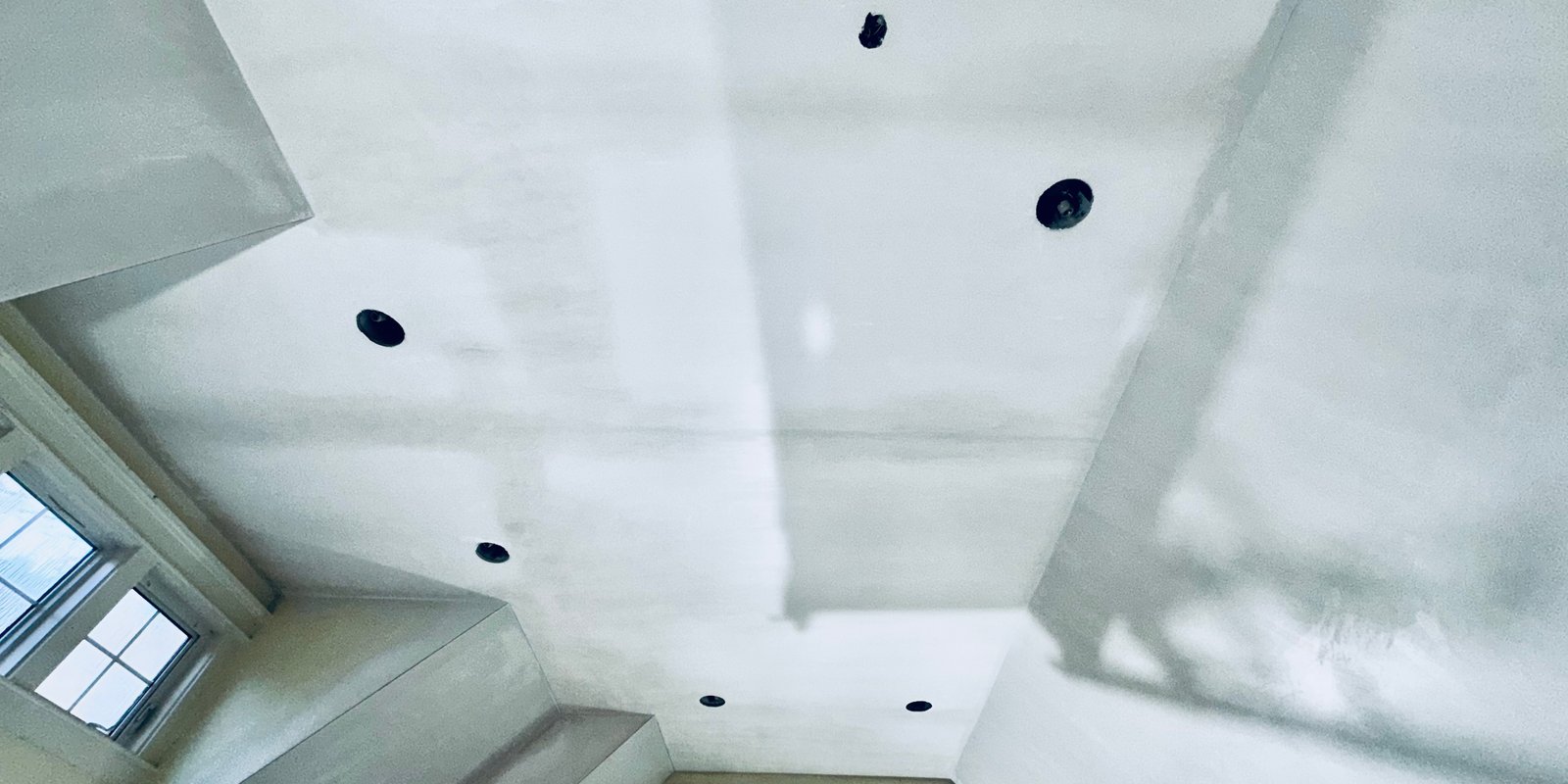

Builders choose blueboard when the finished wall is intended to receive gypsum veneer plaster rather than conventional drywall tape and joint compound. The attraction is not the blue paper itself. It is the complete wall system: efficient panel installation followed by a continuous, hard, hand-troweled plaster finish.
Blueboard and standard drywall are related gypsum panels, but they are not interchangeable finish specifications. One is manufactured as a plaster base. The other is normally finished at joints and fasteners with tape and compound before decoration.
What Is Blueboard?
“Blueboard” is the common jobsite term for gypsum base designed to receive veneer plaster. Its distinctive face paper helps identify it and provides the controlled surface required by the specified plaster system.
ASTM C1396 recognizes gypsum base for veneer plaster as a separate gypsum-board product category designed for that application. ASTM C588 covers gypsum base types, while ASTM C844 addresses their installation. See the ASTM gypsum-board scope and ASTM C844 installation requirements.
The Gypsum Association explains that plaster base is specifically manufactured to work with corresponding veneer plaster products. The paper is not merely colored drywall paper, and the board should be stored and protected as required before plastering. Read the Gypsum Association veneer plaster guide.
Blueboard vs. Drywall
The simplest distinction is the finish that follows the board.
| Question | Blueboard and veneer plaster | Conventional drywall |
|---|---|---|
| Intended finish | Thin gypsum veneer plaster over the field | Tape and joint compound at joints and fasteners |
| Surface character | Continuous hand-troweled plaster | Board surface with finished joints |
| Typical sanding | Limited dry sanding when plaster is applied correctly | Multiple finishing and sanding operations may be required |
| Surface hardness | Veneer plaster can provide a hard, abrasion-resistant finish | Depends on board, compound, level of finish, and coating |
| Skilled trade | Plaster crew | Drywall finishing crew |
| Specification language | Plaster base, one- or two-coat veneer system | Board type and Level 0–5 finish |
| Moisture exposure | Interior system; standard plaster base is not tile backer or a wet-area panel | Specialized moisture-resistant boards are available for defined uses |
Neither assembly is universally better. Builders choose between them based on design intent, labor, schedule, lighting, tested assembly requirements, future access, and client expectations.
Why Builders Specify Blueboard
1. A hard, continuous finish
Veneer plaster covers the field of the wall rather than concentrating finish material only at seams and fasteners. USG describes high-strength veneer plaster as producing a hard, abrasion-resistant surface for residential and commercial applications with significant traffic. See USG’s Imperial Veneer Basecoat information.
For builders, that finish can suit custom homes, multifamily circulation, stairwells, schools, offices, and other interiors where surface character and resistance to ordinary wear matter.
2. Strong appearance under demanding light
Large windows, long walls, recessed linear lighting, and wall-mounted fixtures can create severe side-lighting. Every wall system requires straight framing and careful installation, but a properly executed continuous plaster finish can be a strong choice for these rooms.
Two-coat veneer systems can also help level slight surface variation and provide improved aesthetics for indirect light or high-gloss paint, according to the Gypsum Association. That makes the finish decision part of preconstruction—not an upgrade to add after board is hung.
3. Less reliance on dry sanding
Conventional drywall finishing commonly requires successive joint-compound applications and sanding. Veneer plaster sets chemically and is finished wet with trowels. Correct plastering can therefore reduce the extensive dry sanding associated with high-finish drywall.
This does not make the work dust-free. Board cutting, preparation, repairs, and other trades still create dust, and plastering introduces water and washout requirements. Builders should plan protection and cleanup for the actual system rather than relying on a slogan.
4. Efficient finishing once the building is ready
The Gypsum Association says the plastering phase of a one-component veneer system can be completed in one or two days and may be ready for decoration in about 24 hours under favorable conditions. Those are conditional manufacturer-industry statements, not a schedule promise for every building.
Temperature, humidity, ventilation, wall area, crew size, substrate condition, system selection, and job sequencing all affect production and decoration timing. The practical advantage is that plaster sets promptly when the building and crew are ready for continuous application.
5. Clean architectural details
Blueboard and veneer plaster adapt well to:
- arches and curved openings;
- vaulted, tray, and cathedral ceilings;
- stairwells;
- skylight wells and dormers;
- soffits and beams;
- crisp outside corners; and
- transitions between new construction and existing plaster.
These details still require planning. Board bending radii, accessory selection, framing plane, control joints, and the sequence around windows, doors, cabinets, and trim should be resolved before plastering.
6. A familiar regional finish
In Greater Boston and much of New England, blueboard and veneer plaster are established residential construction practices. Trade familiarity can make the system practical where experienced board hangers, plasterers, builders, and painters understand their responsibilities.
Regional familiarity is not a technical property, but it matters. The best specification is one the project team can execute reliably.
Why Blueboard Is Not Just “Better Drywall”
Blueboard should not be selected as a freestanding upgrade and then painted like regular drywall. Its purpose is to receive veneer plaster.
Likewise, blueboard does not automatically provide:
- a fire-resistance rating;
- a sound-transmission rating;
- moisture or mold resistance;
- impact resistance;
- tile-backer performance; or
- structural capacity.
Those qualities depend on the exact panel, thickness, framing, fasteners, insulation, number of layers, finish, and tested assembly.
ASTM C844 specifically says details for required fire resistance and sound control must come from recognized tests or listings. It also states that gypsum veneer base should not be used for direct-adhered tile in areas exposed to abnormal moisture, humidity, or temperature. The blue face is not permission to use standard blueboard in a shower.
One-Coat vs. Two-Coat Veneer Plaster
One-coat systems
A one-component finish plaster is applied directly to approved gypsum plaster base. This approach can be productive and produces the continuous plaster surface many builders want.
Two-coat systems
A veneer basecoat is followed by a finish coat. Two-coat systems can provide additional leveling ability and a refined appearance for demanding light and coating conditions.
Selection should follow the manufacturer’s approved system and the project specification. Products from different systems should not be casually mixed based on color, habit, or availability.
USG’s technical guidance says the substrate should be inspected before plaster application and must be properly prepared, reasonably straight, clean, and treated for the chosen system. Review its veneer plaster application technique.
Builder Coordination Checklist
Blueboard performs best when responsibilities are settled before hanging begins.
Before board
- Confirm wall type, tested assemblies, panel thickness, and layer count.
- Review framing tolerances, blocking, deflection, and backing.
- Identify curves, arches, control joints, reveals, and dissimilar-material transitions.
- Coordinate mechanical, electrical, plumbing, low-voltage, and cabinet requirements.
- Confirm wet-area and specialty-panel locations.
Before plaster
- Complete inspections that require open or unfinished walls.
- Make the building weather-tight.
- Establish appropriate temperature, humidity, and ventilation.
- Protect board from water, contamination, and prolonged sunlight.
- Verify fastening, joint treatment, accessories, and repairs.
- Plan plaster breaks from angle to angle to avoid unnecessary cold joints.
After plaster
- Protect finished walls from lifts, carts, material storage, and follow-on trades.
- Follow the plaster manufacturer’s decoration guidance.
- Use a compatible primer and coating system.
- Repair trade damage before final painting rather than burying it under compound.
When Conventional Drywall May Be the Better Choice
Drywall can be the more practical system when:
- qualified plaster labor is unavailable;
- the specification requires specialty drywall finishes or panels;
- frequent future access and patching are expected;
- the project schedule cannot support wet-trade conditions;
- local pricing strongly favors drywall;
- the owner prefers a conventional, widely repairable assembly; or
- the selected tested system is based on drywall finishing.
A properly specified Level 5 drywall finish can provide an excellent smooth painted surface. Builders should compare full assemblies and expectations, not “blueboard versus drywall” as if panel color alone determines quality.
Blueboard FAQ
Can blueboard be painted without plaster?
It is manufactured as gypsum base for veneer plaster. Using it as ordinary painted drywall defeats the reason for specifying it and may conflict with manufacturer requirements. Follow the selected system’s documentation.
Is blueboard waterproof?
No. Standard gypsum plaster base is an interior product and is not automatically a moisture-resistant panel, cement board, or tile backer.
Is blueboard more expensive than drywall?
Cost varies with material, labor, finish level, geometry, location, and trade availability. Compare complete installed systems—including the required appearance—not sheet prices alone.
Does blueboard eliminate cracks?
No. Proper framing, fastening, joint treatment, control joints, environmental conditions, and building movement still matter. Veneer plaster is hard, but significant movement can crack any rigid finish.
Can blueboard meet old plaster?
Yes, when the existing plaster is sound and the transition is properly backed, aligned, reinforced, and finished. Differences in thickness and movement must be addressed before the final coat.
Specify the Complete System
Patriot Plastering installs blueboard and veneer plaster for additions, remodels, new homes, and detailed interiors across Quincy, Greater Boston, and the South Shore. We coordinate with builders around substrate readiness, transitions, lighting, and finish expectations before plastering begins. Our Braintree drywall and plastering guide covers the mixed assemblies builders often encounter in basements, additions, and remodeled homes.
Compare conventional drywall installation and finishing, review completed work in the project gallery, or confirm coverage through the service-area directory.