

 479 Beale St - Quincy, MA 02169
 Mon-Sun: 6:00am - 7:30pm


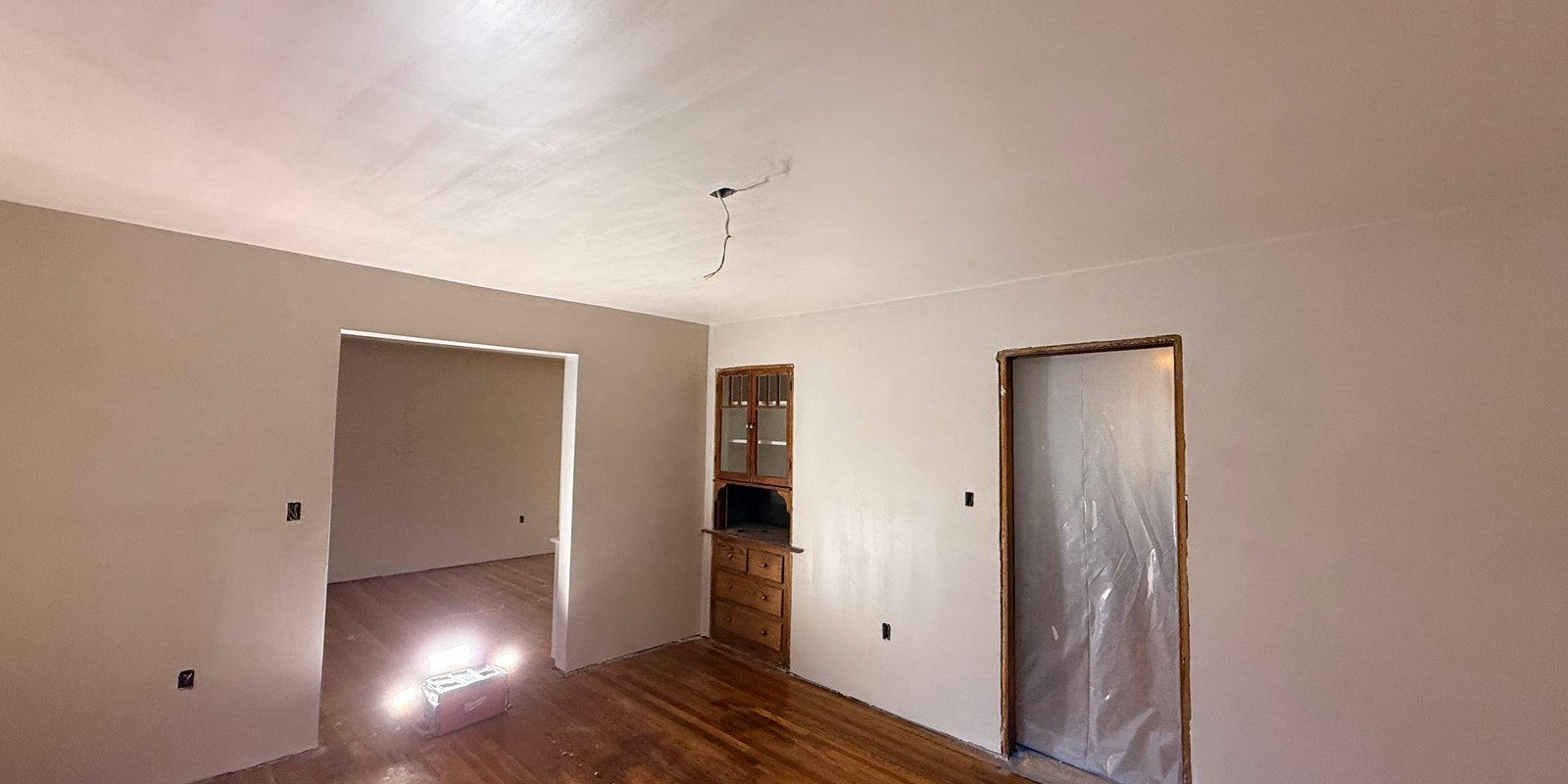

Properly installed veneer plaster does not have a short, predetermined expiration date. A sound system can remain serviceable for decades, but no responsible plasterer can promise an exact number of years without knowing how the wall was framed, boarded, plastered, painted, and maintained.
The useful answer is not simply “50 years” or “a lifetime.” Veneer plaster lasts as long as its substrate remains stable, its bond remains sound, and water or building movement does not undermine the assembly. This guide explains what that means in practice and how to tell normal aging from a problem that needs attention.
What Is a Veneer Plaster System?
Veneer plaster is a thin gypsum plaster finish applied over a compatible gypsum plaster base, commonly called blueboard. It is not ordinary joint compound spread over standard drywall. The base and finish are designed as a system.
Depending on the specification, veneer plaster may be installed as:
- a one-coat system applied directly to approved gypsum plaster base; or
- a two-coat system with a veneer basecoat followed by a finish coat.
The Gypsum Association explains that gypsum plaster base is manufactured specifically to work with veneer plaster. Its blue-tinted face paper distinguishes it from regular gypsum board. The association also notes that two-component systems can improve appearance where indirect lighting or high-gloss paint will make the wall especially demanding. See the Gypsum Association overview of veneer plaster systems.
That system relationship matters to longevity. Correct board, fastening, joint treatment, mixing, thickness, timing, and environmental conditions all contribute to the finished wall.
So, How Many Years Should Veneer Plaster Last?
There is no manufacturer-supported universal lifespan that applies to every veneer plaster wall. In a dry, stable interior with appropriate installation, it is reasonable to expect the finish to remain useful for many decades. It may need paint, isolated crack repair, or a localized patch during that time without needing wholesale replacement.
Traditional multi-coat plaster and modern veneer plaster are different assemblies, so historic plaster should not be used to manufacture a precise warranty for veneer systems. It does, however, demonstrate an important principle: plaster itself is not inherently short-lived. The National Park Service has documented successful stabilization of traditional plaster more than 170 and even 200 years old. Those examples involved preservation work and are not predictions for a modern wall, but they show why condition is more meaningful than age alone. Read the National Park Service plaster preservation case study.
When evaluating a veneer plaster wall, ask:
- Is the finish still bonded to the base?
- Is the gypsum base securely fastened to stable framing?
- Has the assembly remained dry?
- Are cracks isolated, or do they indicate continuing movement?
- Have previous repairs used compatible materials?
If those fundamentals remain sound, age by itself is rarely a reason to replace the finish.
What Determines Veneer Plaster Lifespan?
Substrate installation
The finish can only be as stable as the board and framing beneath it. ASTM C844 covers minimum requirements for installing gypsum base to receive veneer plaster, including framing and fastener considerations. A poorly supported ceiling, missed fasteners, badly placed joints, or movement at dissimilar materials can eventually show through the finish. Review the scope of ASTM C844 for gypsum veneer base.
Plaster application
USG advises that substrate preparation and correct application technique are critical to veneer plaster performance. The base must be properly prepared, clean, reasonably straight, and treated according to the specified system. Timing matters because gypsum plaster sets chemically rather than simply air-drying like premixed joint compound. See USG’s veneer plaster application guidance.
Building movement
Wood framing changes dimension with seasonal moisture, new construction can settle, and long framing spans can flex. Control joints, proper framing, appropriate board orientation, and sound transitions reduce stress, but no brittle finish is immune to significant movement.
A fine crack at a stressed opening is different from a field of cracks across a ceiling. The location and pattern usually reveal more than the crack width alone.
Moisture
Plaster and gypsum board belong in a controlled interior environment. A roof leak, plumbing failure, exterior opening, or persistent condensation can stain paint, soften gypsum base, corrode fasteners, or weaken the bond between layers.
The finish should never be repaired before the water source is identified and corrected. If the base is still firm and the assembly dries promptly, a localized repair may be possible. Saturated, deformed, mold-contaminated, or delaminated material may need removal.
Impact and use
USG describes high-strength veneer plaster as producing a hard, abrasion-resistant surface. That makes it well suited to busy residential and commercial interiors, but “hard” does not mean indestructible. Furniture, door hardware, repeated impacts, and work by other trades can still damage a wall. See the USG Imperial Veneer Basecoat product guidance.
Does Veneer Plaster Crack?
It can. A crack does not automatically mean the plaster has reached the end of its life.
Common categories include:
- Hairline finish cracks: often cosmetic and potentially repairable.
- Cracks at doors, windows, or material transitions: frequently associated with concentrated movement.
- Straight cracks along board joints: may indicate joint treatment, fastening, or movement issues.
- Recurring cracks: suggest the cause is still active.
- Bulging or hollow areas: may indicate loss of bond or movement beneath the finish.
Before filling a crack, determine whether it is stable. A cosmetic patch over ongoing structural movement, framing deflection, or moisture will usually reopen.
When Can Veneer Plaster Be Repaired?
Localized repair is often practical when the surrounding plaster remains firmly bonded and the gypsum base is dry and structurally sound. Repair may involve opening and reinforcing a crack, replacing a small damaged section of base, applying a compatible patch, and feathering the finish into the surrounding plane.
Broader resurfacing may make sense when a wall is sound but cosmetically rough, repeatedly patched, or inconsistent under strong lighting. Patriot Plastering’s guide to plastering and skim coating explains the difference between repairing an isolated defect and refinishing an entire surface.
Replacement becomes more likely when:
- the gypsum base is soft, swollen, or badly deformed;
- large areas have lost their bond;
- moisture or mold has affected concealed materials;
- movement has damaged the underlying assembly;
- a renovation requires substantial wall or ceiling removal; or
- incompatible past work cannot provide a reliable base.
How to Help Veneer Plaster Last
Most maintenance is straightforward:
- repair roof, flashing, plumbing, and condensation problems promptly;
- avoid repeatedly mounting heavy objects without suitable anchors or blocking;
- investigate recurring cracks instead of repeatedly caulking or painting them;
- use appropriate primers and coatings after repairs;
- preserve compatible transitions when remodeling; and
- have ceilings assessed if they sag, bulge, or sound loose.
Paint maintenance protects appearance, but paint is not structural repair. Stain-blocking primer can conceal a dry water mark; it cannot correct a wet assembly.
Problems That Look Like Plaster Failure but May Not Be
Not every visible defect begins in the veneer finish. Diagnosing the layer that failed prevents unnecessary replacement.
Paint flashing or uneven sheen
Patches, different primer porosity, and strong side-lighting can create dull or shiny areas even when the plaster plane is sound. Coating preparation may be the issue rather than plaster deterioration.
Nail pops and trade damage
A small raised spot may be related to a fastener or impact instead of widespread bond failure. The surrounding board and framing still need to be checked before the area is patched.
Condensation stains
A ceiling mark near a duct, exterior corner, or bathroom may come from condensation rather than a roof leak. The moisture source and insulation or ventilation condition should be addressed before refinishing.
Cracks where an addition meets the original house
New and existing construction can move differently. A recurring line at that transition may require reinforcement, backing, or movement accommodation—not simply a harder patch.
Patriot’s plaster and drywall repair guide explains why cracks, holes, stains, and loose finishes need different scopes. When damaged plaster base must be replaced, a localized drywall or board installation may be part of rebuilding the assembly before the plaster finish is restored.
When Should a Veneer Plaster Wall Be Assessed?
Arrange a closer inspection when a ceiling sags, an area feels soft, cracking spreads rapidly, the surface moves under light pressure, or staining continues after a supposed leak repair. The same applies when a renovation will open large sections of a plastered wall.
For ordinary cosmetic concerns, photographs and a description can start the conversation. For widespread cracks, suspected moisture, or loose ceilings, an on-site assessment is more useful because sound, movement, and transitions cannot be judged reliably from one image.
Veneer Plaster Lifespan FAQ
Is veneer plaster more durable than standard drywall finishing?
Veneer plaster generally creates a harder, more abrasion-resistant surface than conventional taped drywall finished with joint compound. Overall wall performance still depends on framing, board selection, installation, environment, and use.
Does an old veneer plaster wall need to be replaced?
Not because of age alone. If it remains dry, flat, firmly bonded, and free of active movement, repair and repainting may be all it needs.
Can you skim coat over cracked veneer plaster?
Only after determining why it cracked and repairing unstable areas. A skim coat improves the surface; it does not stabilize loose board, active movement, or water damage.
How soon can veneer plaster fail if it is installed incorrectly?
Installation defects may become visible early, especially under seasonal movement or critical lighting. Some problems take longer to appear. The pattern, location, and surrounding condition should be assessed before choosing a repair.
Get a Condition-Based Recommendation
The lifespan of veneer plaster is best judged on the wall—not from a generic number online. Patriot Plastering evaluates cracks, rough surfaces, damaged ceilings, and transitions between old and new construction throughout Quincy, Greater Boston, and the South Shore. Owners of antique and coastal properties can also review our guide to plastering and repair considerations in Hingham.
Explore our local service-area guides or contact us with the property address and a description of the condition.