

 479 Beale St - Quincy, MA 02169
 Mon-Sun: 6:00am - 7:30pm


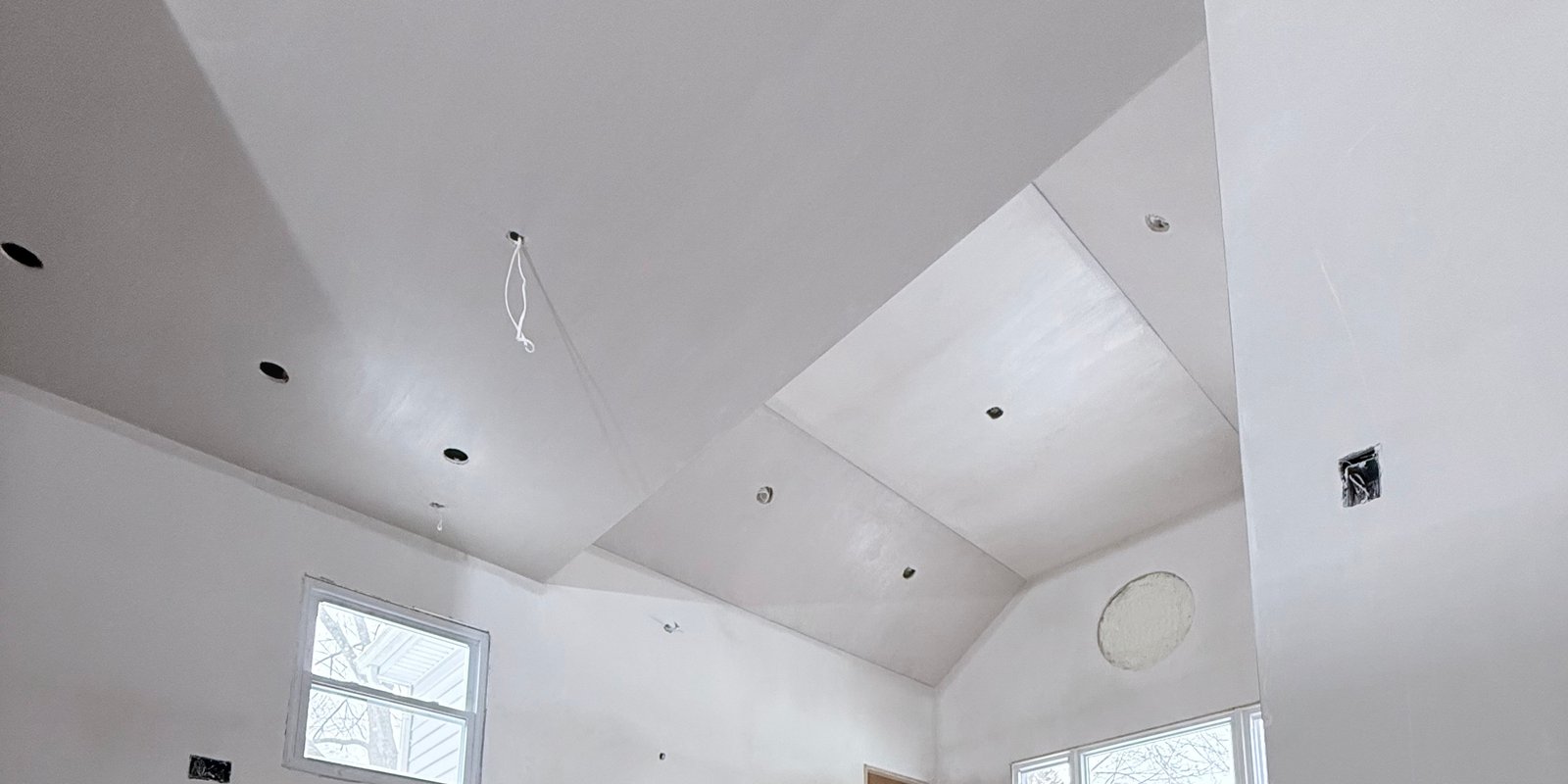

For most luxury homes that call for smooth, painted walls, veneer plaster is one of the strongest finish choices. It creates a hard, continuous, hand-troweled surface that performs especially well in large rooms, stairwells, curved details, and spaces with demanding natural or architectural lighting.
That does not make it the automatic answer for every room. Level 5 drywall, decorative Venetian-style plaster, specialty wallcoverings, wood paneling, and architectural millwork solve different design problems. The best wall finish is the one specified around the architecture, lighting, expected wear, desired texture, repair strategy, budget, and available trade skill.
Start With the Desired Appearance
“Luxury wall finish” describes a result, not a single material. Before selecting an assembly, define what the finished room should communicate.
Ask whether the design calls for:
- quiet, monolithic painted walls;
- a polished or softly mottled decorative plaster;
- bold wallcovering or fabric;
- traditional panel molding or full wood paneling;
- shadow-revealing details and trimless openings;
- curved walls, arches, barrel ceilings, or other sculptural forms; or
- a combination of smooth field walls and feature surfaces.
This distinction prevents a common specification mistake: choosing a material by reputation before deciding what the room needs to look like and how it will be used.
Option 1: Veneer Plaster for Smooth, Architectural Walls
A veneer plaster system uses compatible gypsum plaster base—often called blueboard—with one or two thin coats of gypsum plaster. Unlike conventional drywall finishing, which concentrates tape and joint compound at seams and fasteners, veneer plaster forms a continuous finish across the field of the wall.
For luxury interiors, its strengths include:
- a hard, abrasion-resistant surface;
- crisp treatment at corners, returns, arches, and openings;
- a hand-troweled appearance without a sprayed texture;
- less reliance on extensive dry sanding;
- compatibility with one- and two-coat specifications; and
- a strong background for carefully selected paint.
USG describes its high-strength veneer plaster as suitable where walls face significant traffic and calls the resulting surface hard and abrasion resistant. Its technical guidance also notes that finish selection and application method affect appearance. See USG’s veneer plaster product information.
The Gypsum Association says two-component veneer systems provide improved aesthetics where indirect lighting conditions or high-gloss paint are specified. That is particularly relevant in custom homes with large windows, linear lighting, wall washers, and long uninterrupted surfaces. Read the Gypsum Association veneer plaster overview.
Where veneer plaster makes the most sense
Veneer plaster is a strong candidate for:
- great rooms with extensive natural light;
- foyers and stairwells viewed from several angles;
- curved walls and ceilings;
- coffered, tray, cathedral, and vaulted ceilings;
- high-traffic halls;
- custom additions designed to relate to an older plaster home; and
- spaces where a smooth painted finish is part of the architecture.
Its limitations are equally important. It requires trained plasterers, disciplined job sequencing, compatible base panels, and decisions about control joints and transitions before application begins. Future electrical or plumbing changes also require a repair method suitable for plaster rather than a quick drywall-compound patch.
Option 2: Level 5 Drywall for a High-Specification Painted Finish
Well-executed Level 5 drywall can produce an excellent painted wall. In simplified terms, the joints and fasteners receive the required conventional treatment and a thin skim coat is applied over the entire surface to help equalize texture and porosity.
The Gypsum Association’s levels-of-finish guidance explains that the appropriate drywall finish depends on the final decoration, location, and illumination. It identifies strong side-lighting from windows or surface-mounted fixtures as “critical lighting” and explains that non-flat paints and thin wallcoverings require a higher level of gypsum-board finish. See GA-214, Recommended Levels of Gypsum Board Finish.
Level 5 drywall may be preferable when:
- the project team is already organized around drywall trades and sequencing;
- the design documents specifically require a gypsum-board level of finish;
- future access and conventional drywall repair are priorities;
- the assembly uses specialty gypsum panels not intended for veneer plaster; or
- local labor and schedule make plaster impractical.
Level 5 does not mean every wall will look flawless under every possible light. Framing plane, board installation, joint placement, primer, paint, sheen, and the angle of illumination still matter. “Level 5” should not be used as a substitute for a complete appearance specification.
Option 3: Decorative and Venetian-Style Plaster
Decorative plaster is chosen for color movement, depth, burnish, texture, or a stone-like visual effect. It is a finish treatment and an artisan specialty—not simply a harder version of ordinary wall paint.
It can be highly effective on:
- fireplaces and feature walls;
- powder rooms;
- entry halls;
- dining rooms;
- domes and curved ceilings; and
- spaces where the wall itself is intended to be a focal point.
The substrate still matters. A decorative coating will not conceal an unstable wall, and some polished finishes make substrate irregularities more visible. Samples should be reviewed in the actual room under final lighting whenever possible.
Patriot Plastering specializes in veneer plaster, skim coating, drywall, and repair. Decorative Venetian-plaster systems should be specified and installed by a contractor experienced with the exact selected product.
Option 4: Wallcoverings, Paneling, and Millwork
Luxury does not require every surface to be plaster. Natural wood, painted paneling, fabric, grasscloth, and premium wallcoverings can introduce scale and texture that a smooth wall cannot.
Their success still depends on the substrate:
- thin or reflective wallcoverings can telegraph seams and imperfections;
- panel systems need coordinated backing and fastening;
- reveals and trimless details demand accurate planes;
- moisture-sensitive materials need appropriate environmental conditions; and
- future access should be planned before expensive finishes are installed.
A strong design may use veneer plaster in circulation areas and ceilings, millwork in a library, wallcovering in a dining room, and decorative plaster at a fireplace. The finishes should be coordinated rather than ranked in isolation.
Lighting Changes the Standard
Lighting is one of the most important—and most overlooked—wall-finish decisions.
Strong light traveling almost parallel to a wall creates shadows at even small ridges and depressions. Tall windows, recessed linear fixtures, wall grazers, and glossy coatings can expose variations that would disappear under diffuse light.
Sherwin-Williams notes that higher-gloss finishes reflect more light and generally reveal imperfections more readily, while lower sheens tend to conceal them. The company recommends choosing sheen around the room, windows, traffic, performance expectations, and aesthetic preference. See its guide to gloss and sheen.
For demanding rooms:
- Review the framing plane before closing the walls.
- Identify critical-lighting directions on the drawings.
- Choose the wall system and finish level before bidding.
- Build a representative sample if appearance is unusually important.
- Review primer and paint with the coating manufacturer.
- Inspect under lighting similar to the completed room—not only temporary work lights.
Veneer Plaster vs. Level 5 Drywall
| Consideration | Veneer plaster | Level 5 drywall |
|---|---|---|
| Surface character | Continuous, hand-troweled gypsum plaster | Skim-coated gypsum-board finish |
| Surface hardness | Generally harder and more abrasion resistant | Depends on board, compounds, coating, and abuse rating |
| Sanding | Limited dry sanding when correctly applied | More sanding and dust control typically required |
| Trade availability | Requires experienced plasterers | More widely available drywall labor |
| Curves and details | Well suited to sculptural transitions | Possible with correct board and finishing specification |
| Future repair | Requires compatible plaster repair skills | Conventional drywall repairs are widely understood |
| Best use | Premium continuous finish and demanding architecture | High-spec painted drywall within a drywall-led project |
The table is a planning tool, not a claim that one system wins every category. Fire, sound, impact, and moisture performance depend on the complete tested assembly—not merely the visible finish.
What Should a Luxury-Home Finish Specification Include?
A useful specification should state:
- substrate and panel type;
- one- or two-coat veneer plaster system, or drywall level of finish;
- treatment at joints, corners, control joints, and material transitions;
- expected plane tolerances and framing responsibilities;
- primer, paint type, color, and sheen;
- critical-lighting conditions;
- sample or mockup requirements;
- protection from other trades; and
- repair and touch-up expectations.
Words such as “premium,” “smooth,” and “high end” are not measurable on their own. The more demanding the design, the more important it is to convert visual expectations into specific construction decisions.
Luxury Wall Finish FAQ
Is plaster always better than drywall in a luxury home?
No. Veneer plaster provides a distinctive hard, continuous finish, while Level 5 drywall can be excellent when properly specified and executed. Architecture, lighting, schedule, repair expectations, and qualified labor should drive the choice.
Is veneer plaster the same as Venetian plaster?
No. Veneer plaster is a gypsum wall-finishing system, usually applied over gypsum plaster base. Venetian-style plaster is a decorative finish selected for visual depth, movement, or polish.
Which finish is best under large windows?
There is no automatic answer, but critical side-lighting requires an especially flat substrate and a finish selected for the final paint sheen. Veneer plaster and Level 5 drywall can both work when the complete assembly is planned correctly.
Can an existing rough wall be upgraded?
Often. Stable plaster or drywall may be suitable for skim coating, while loose, wet, or badly damaged material needs repair first.
Plan the Wall Before Choosing the Paint
Patriot Plastering installs veneer plaster, blueboard, drywall, and smooth wall finishes for renovations and new construction across Greater Boston and the South Shore. Early coordination produces a better result than trying to correct framing, lighting, and material transitions after the walls are finished. Our Milton wall-finishing guide looks more closely at blending older rooms, additions, and modern finish systems.
Compare our drywall installation and finishing options, browse the project gallery, or use the service-area directory to confirm local coverage.